Mahsa Koochak
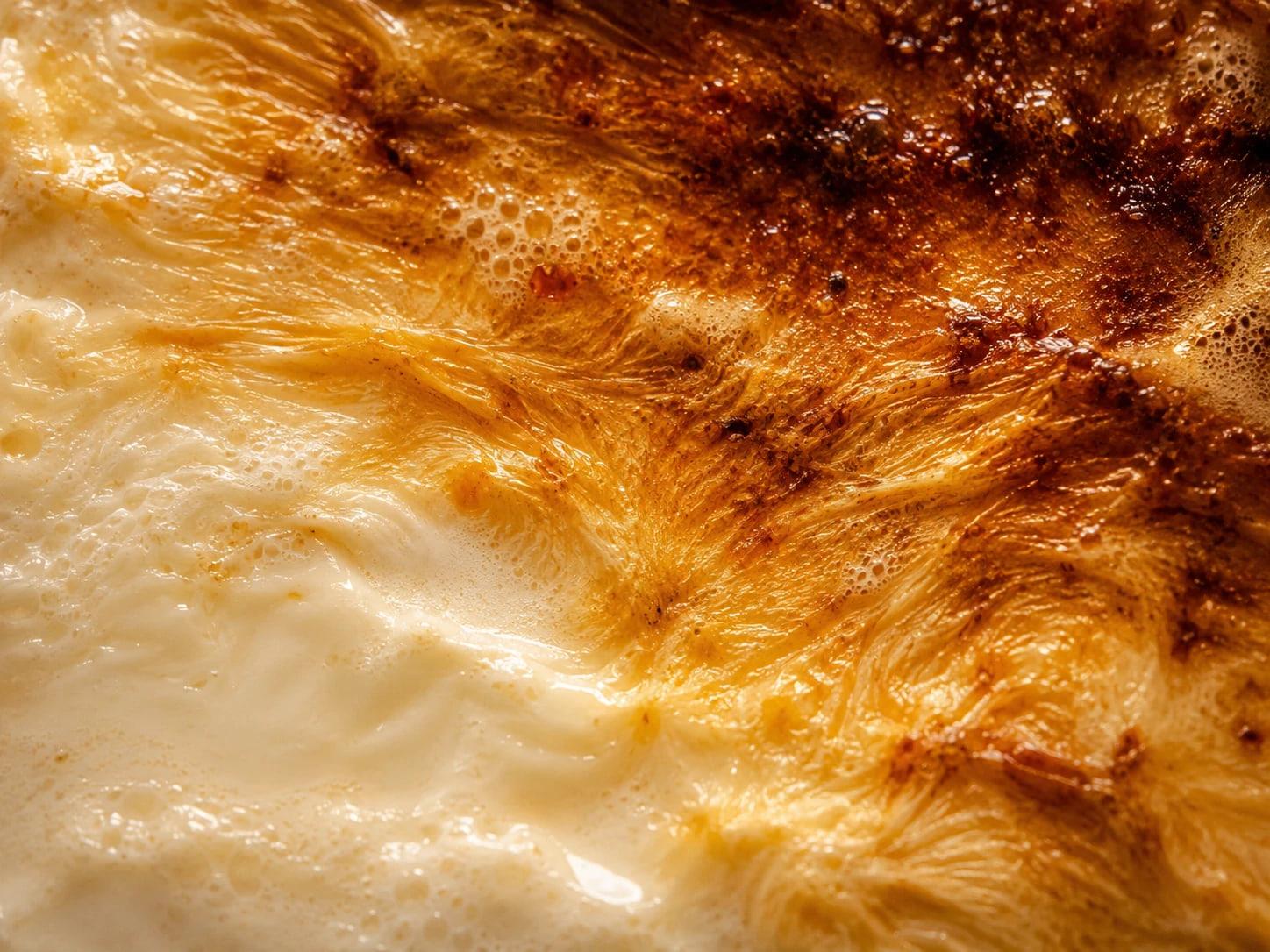
Close-up of a milk skin, pale and creamy on one side, caramelised to orange and dark brown on the other, its surface drawn into fine fibres.

ProjectsInstallation

Practices of Overflow

2022–

Milk, fabric, heat and time. A material that continues to change, whether or not someone is there to witness it.

Year
2022–ongoing
Discipline
Installation / Artistic research
Status
Work in progress
First presentation
Electric Shadows, Amsterdam, 5–7 March 2027 (planned)

Practices of Overflow is the first chapter of milK, an ongoing artistic research I began in 2022. Through milk, I have been exploring the uncertain relationships between care and control, disgust and tenderness, memory and perception.

I am interested in what happens when something can no longer stay within its own form. Milk thickens, develops a skin, rises, spills, separates and dries. It creates boundaries out of itself, only to break them again. I do not approach milk as a metaphor, but as a material with its own behaviour, rhythm and capacity for transformation.
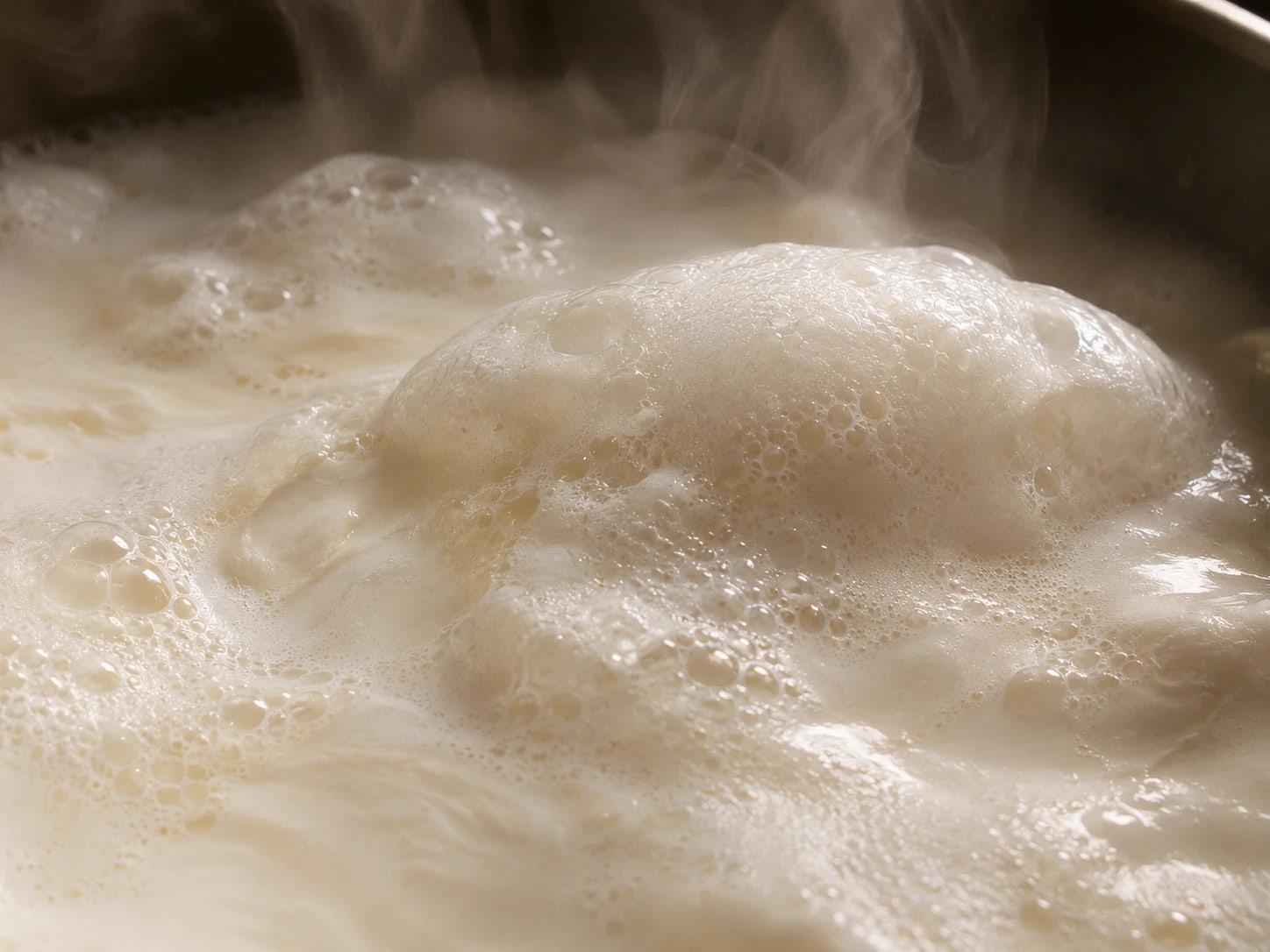
Milk boiling in a pan, rising in thick foam and bubbles, steam curling above.
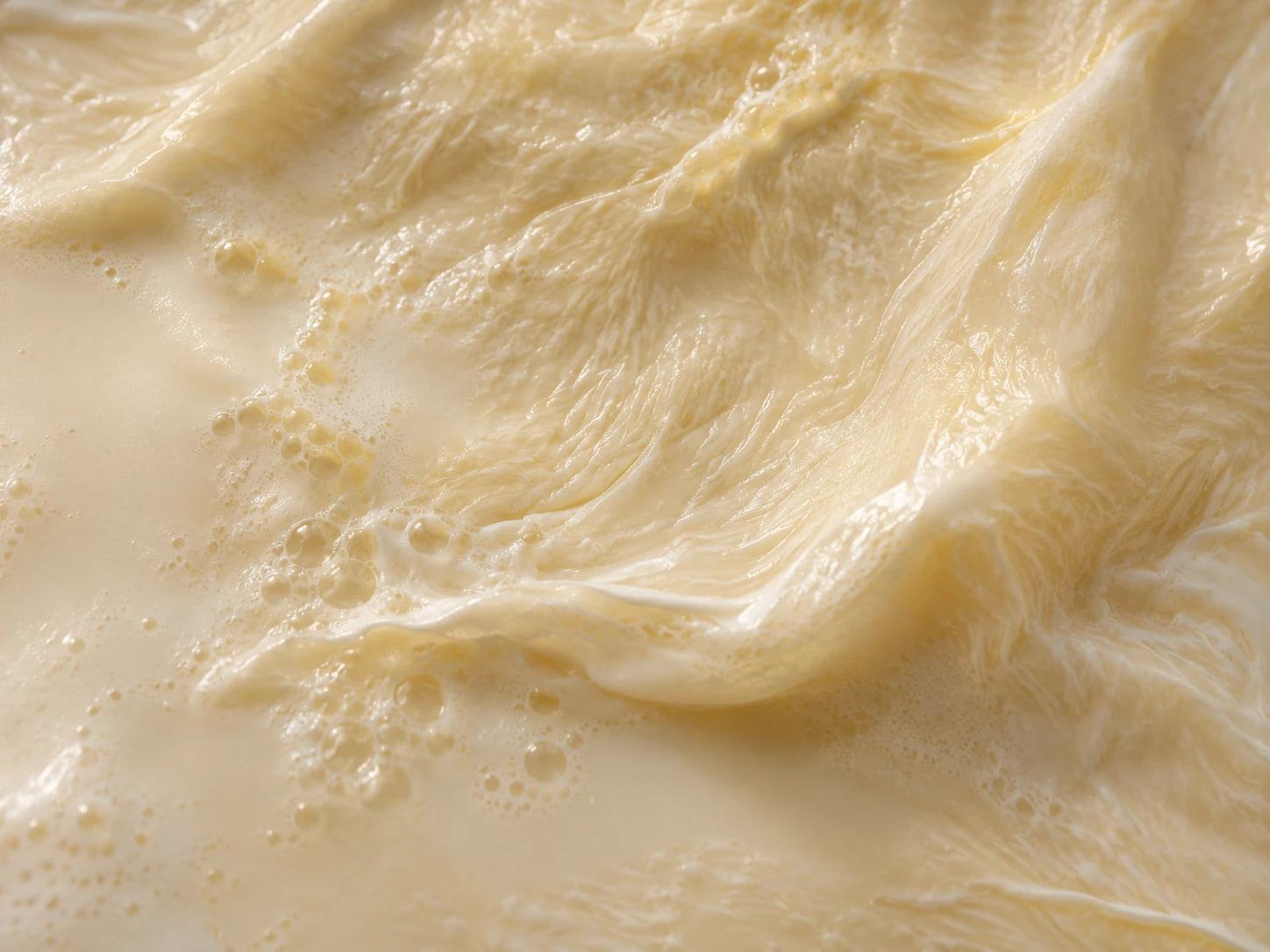
Close-up of a pale yellow milk skin folding into soft ridges, small bubbles at its edge.
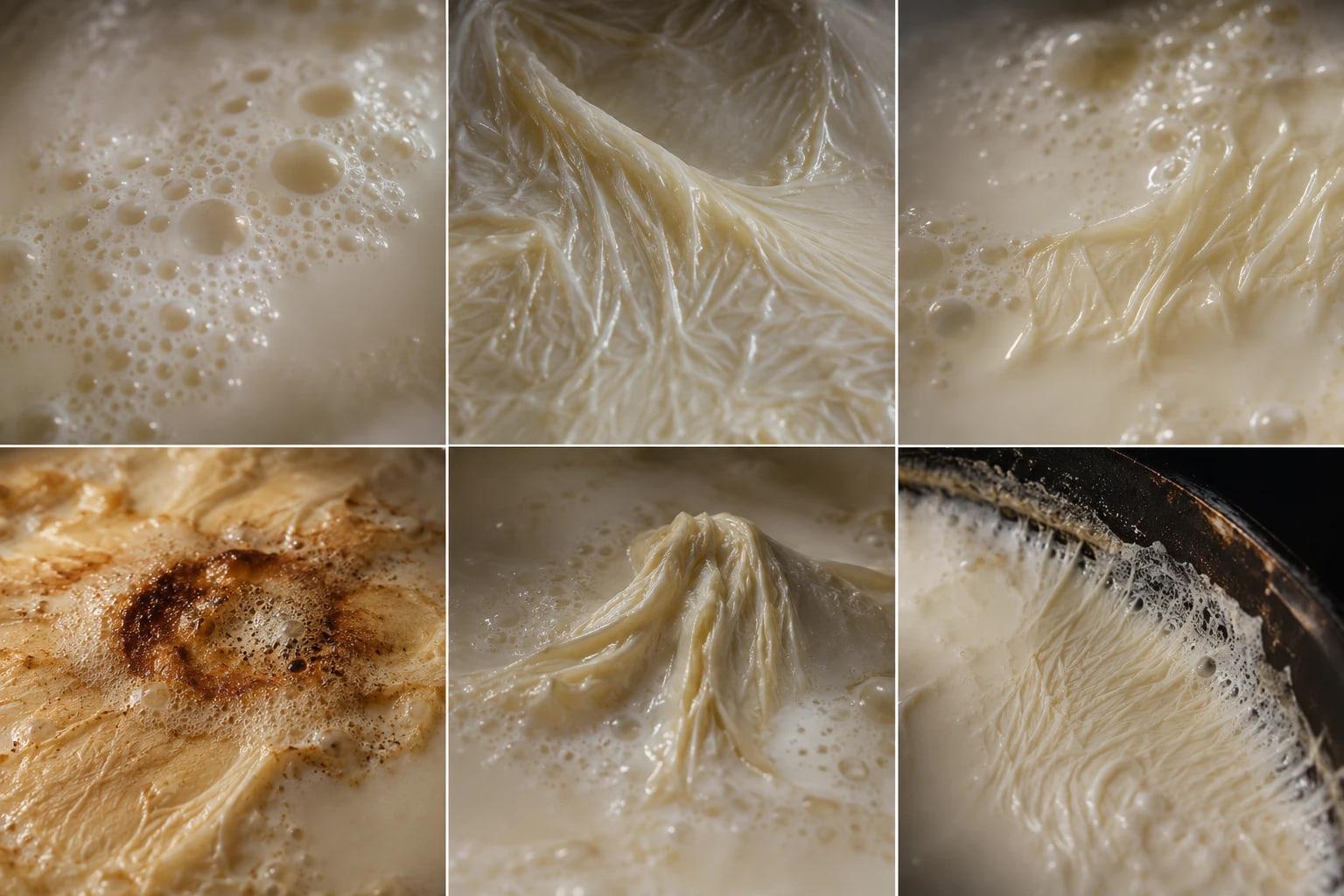
Six close-ups of heated milk: foam, a skin pulled into fibres, a browned patch, a fold rising like a small peak, threads clinging to the rim of a pan.

Perhaps perception has a skin, too. Something so thin that we mistake it for a separation, when it may be the very place where the world touches us back.
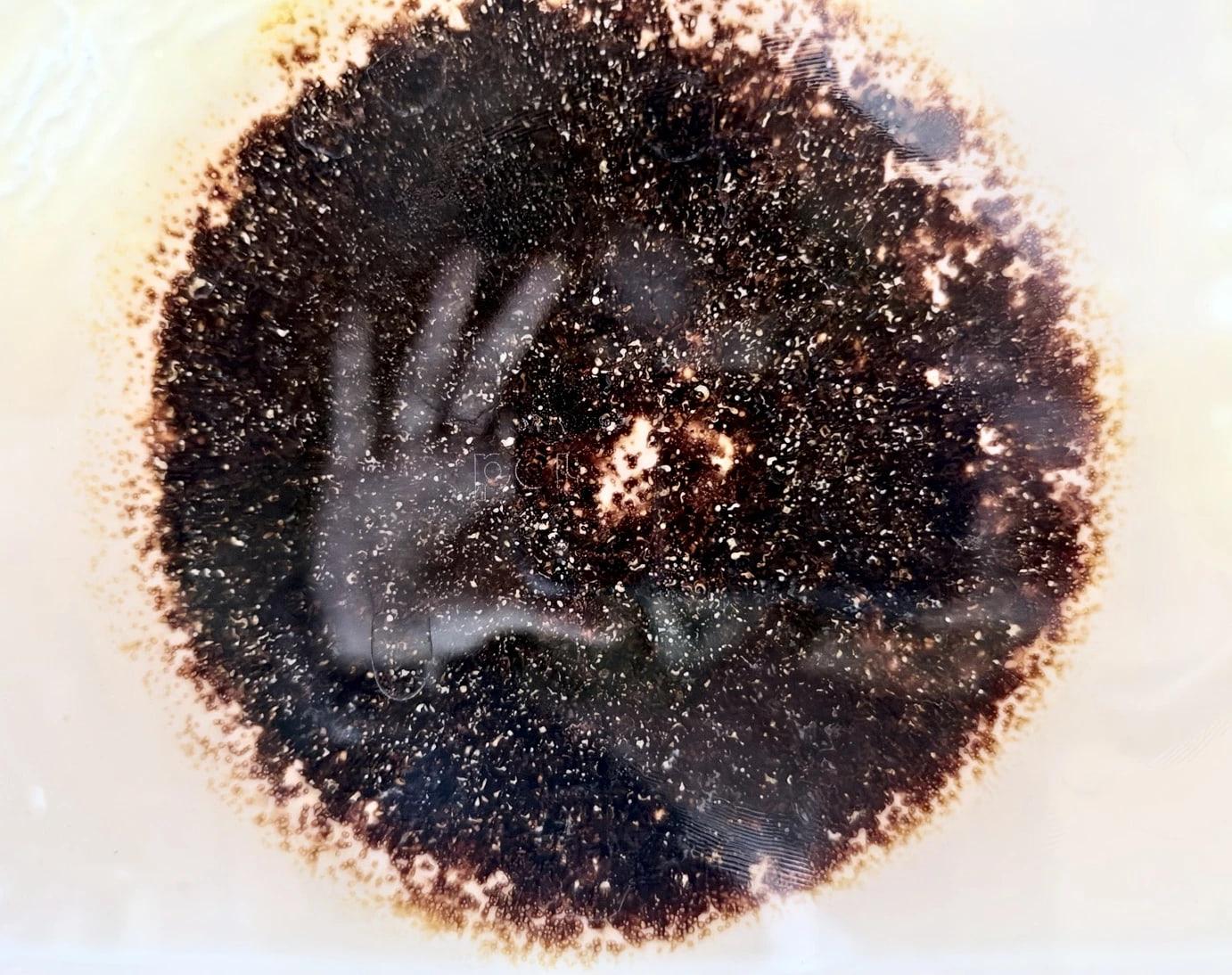
A dark, burnt circle of milk speckled with light, the imprint of a hand visible inside it.
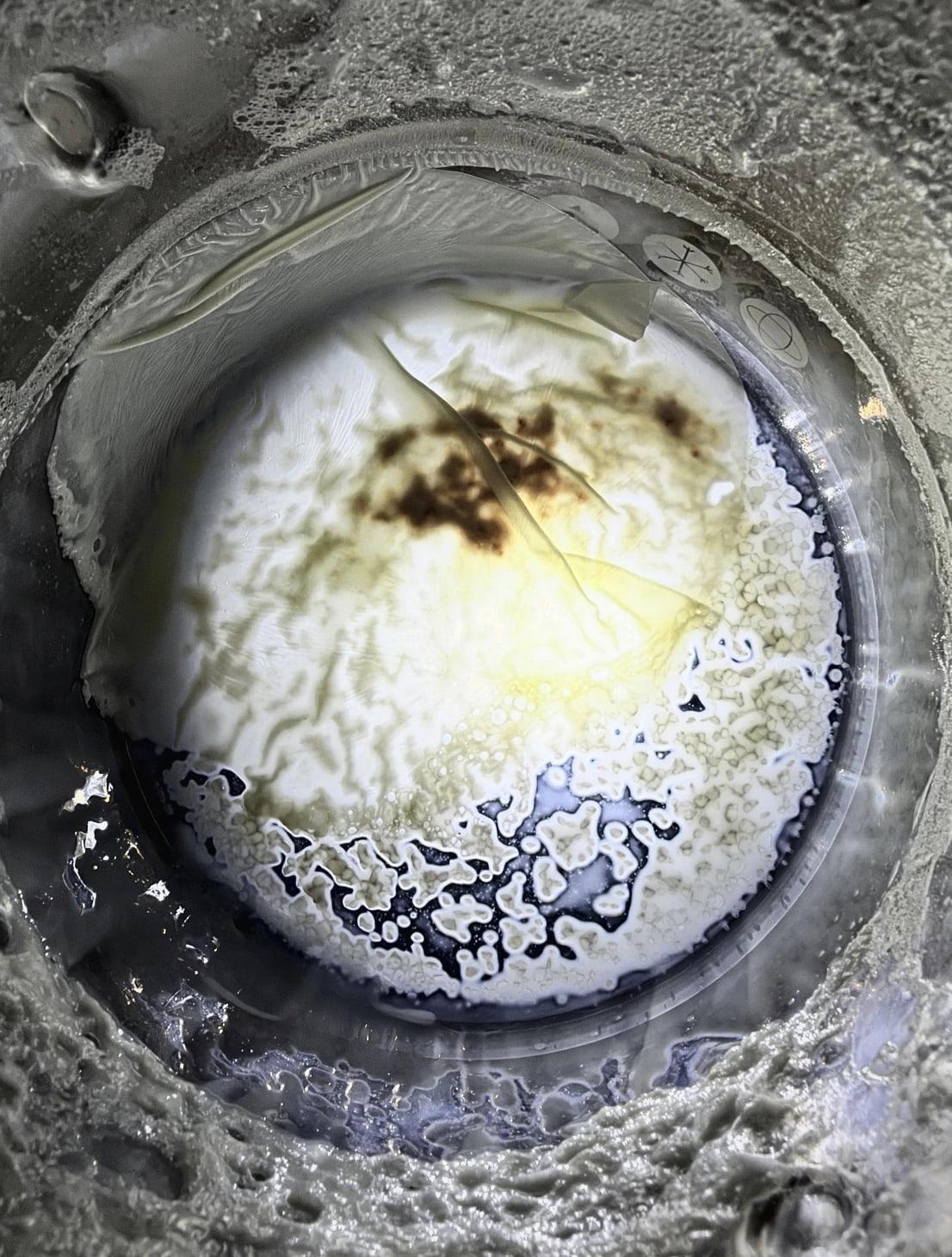
Looking down into a pot: a milk skin with a brown stain, lit yellow at the centre, lace-like holes at its lower edge.
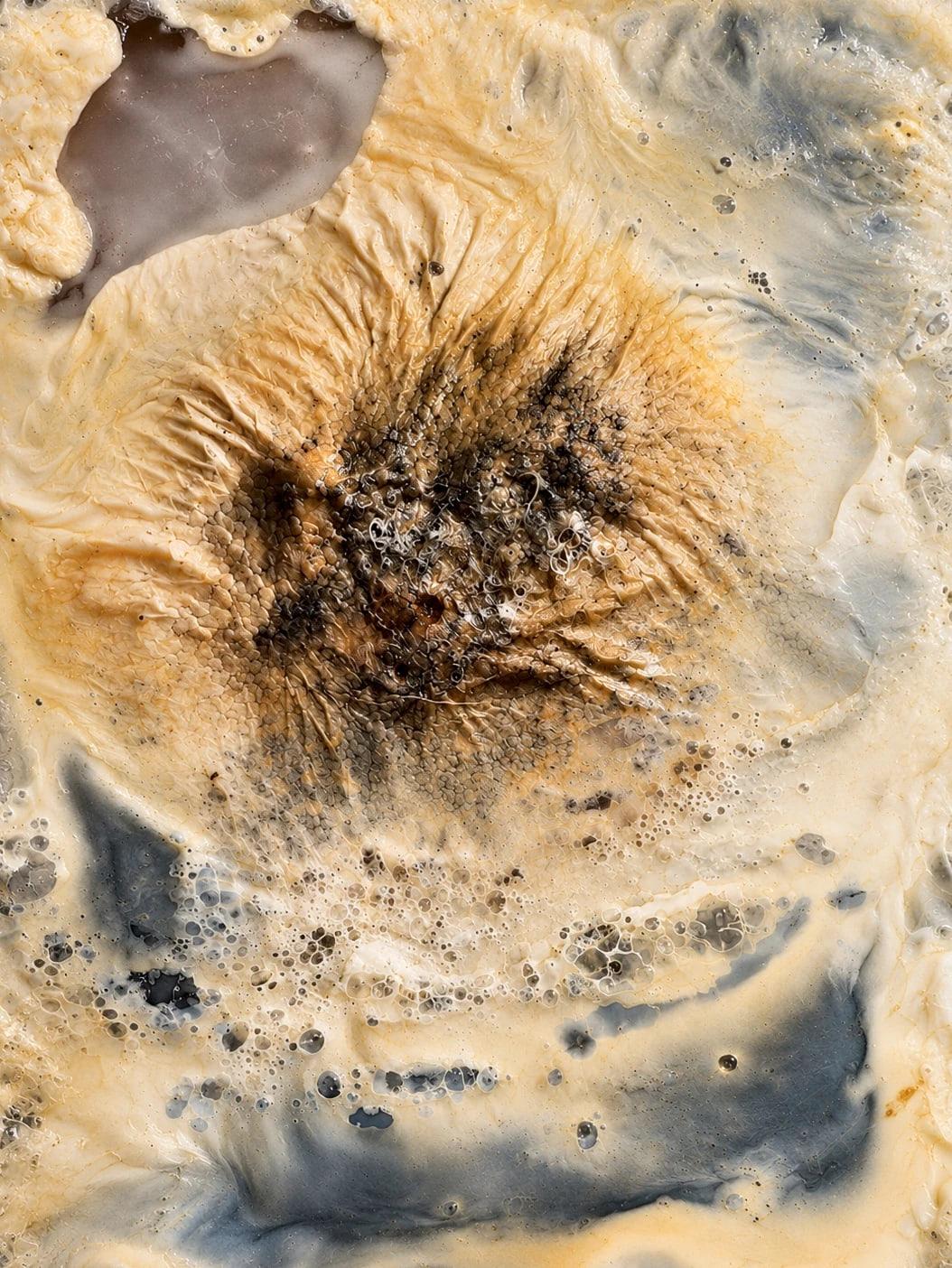
Close-up of a milk skin with a burnt, pitted centre, ochre folds radiating out, blue-grey stains and bubbles around it.
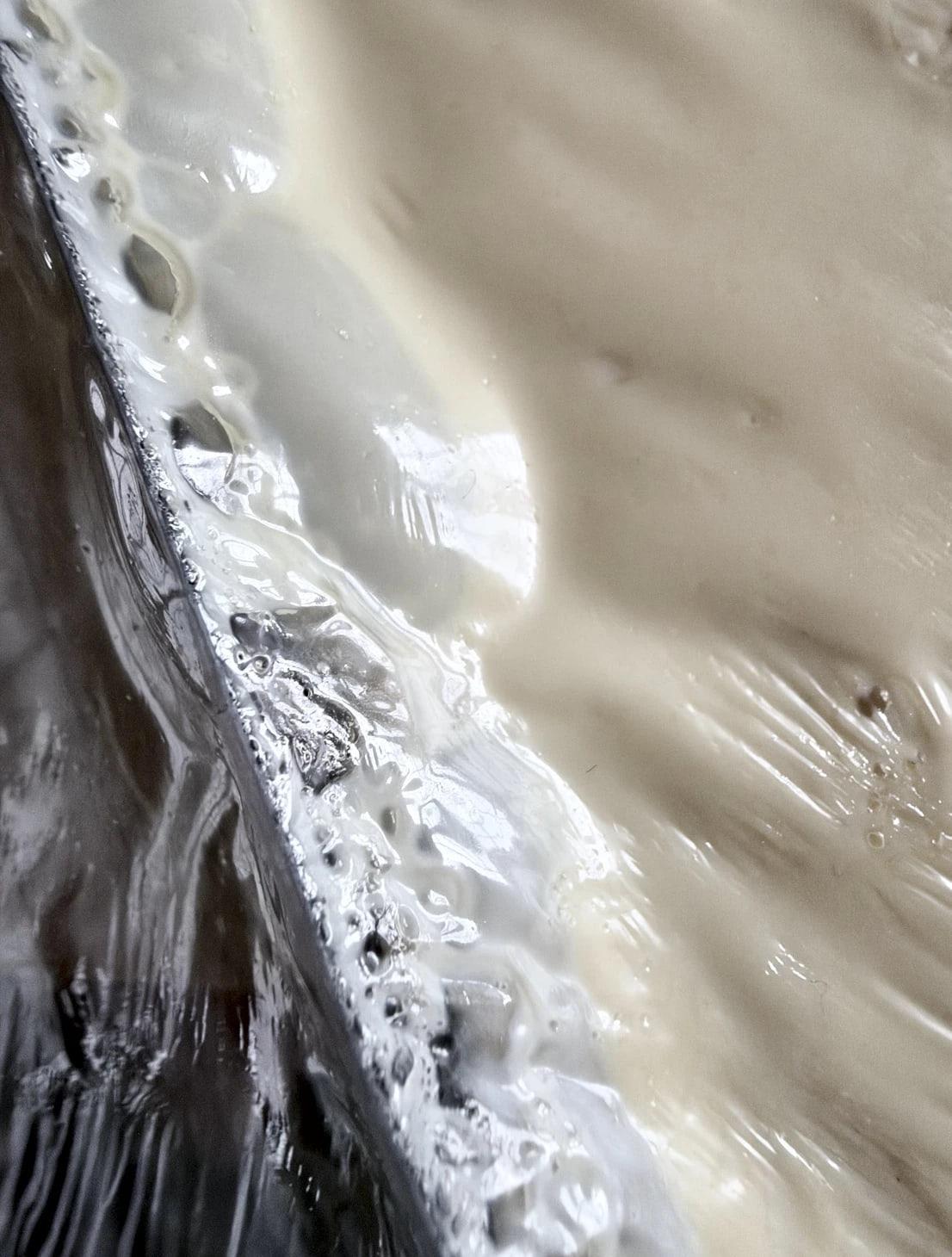
Close-up of milk meeting the silver edge of a pan, glossy and white, with a soft ridged surface.

In its current development, the installation brings together a suspended landscape of fabric and dried milk skin, a single point from which milk drips, and a heated surface that repeatedly forms and loses its skin. Traces of previous transformations remain in the space. Through smell, sound, warmth and duration, the visitor encounters a material that continues to change, whether or not someone is there to witness it.
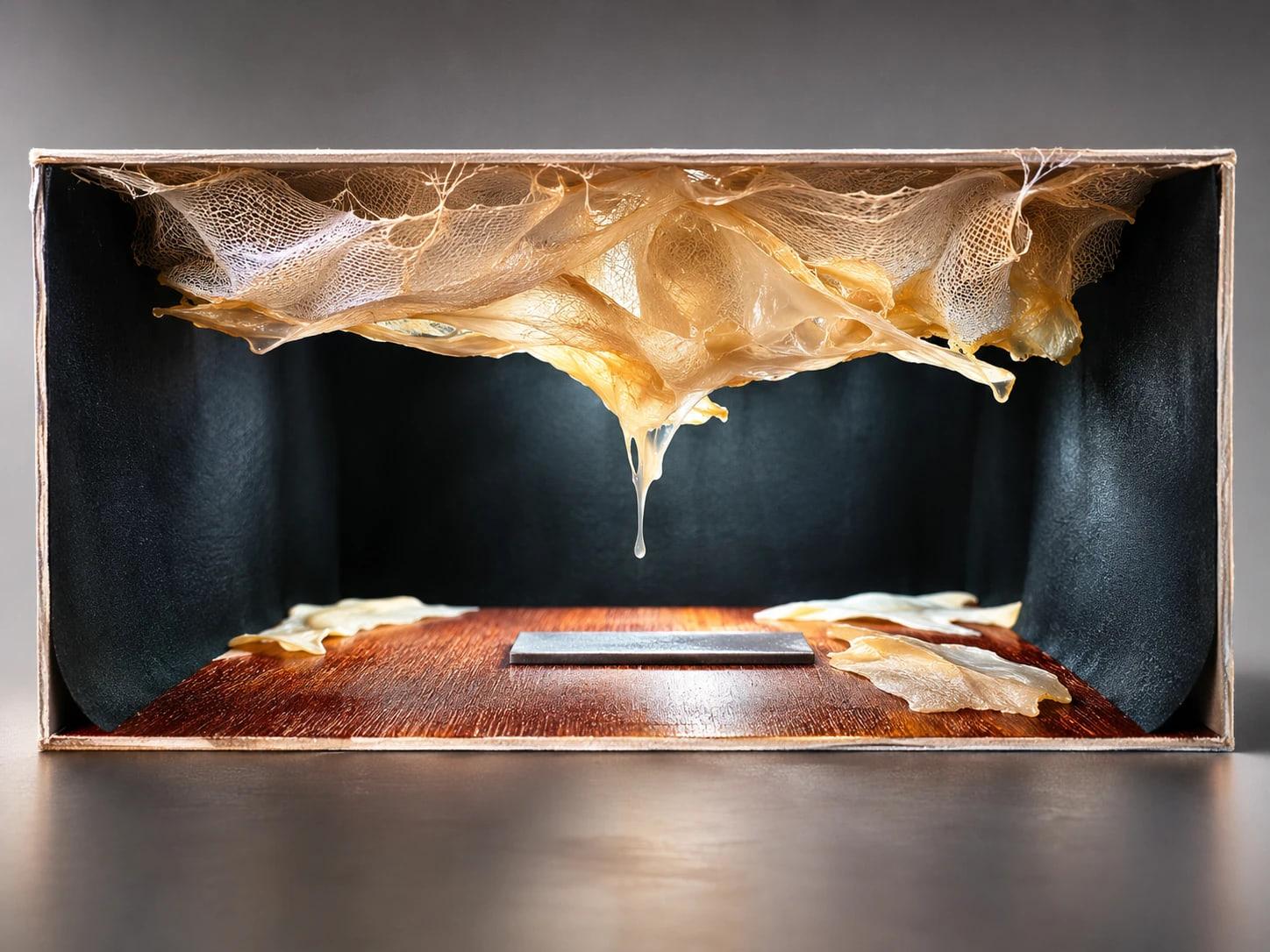
A scale model in an open box: a translucent landscape of fabric and dried milk skin hangs from the ceiling, one drop falling towards a small metal plate on a wooden floor, loose pieces of skin around it.
Scale model of the proposed installation.
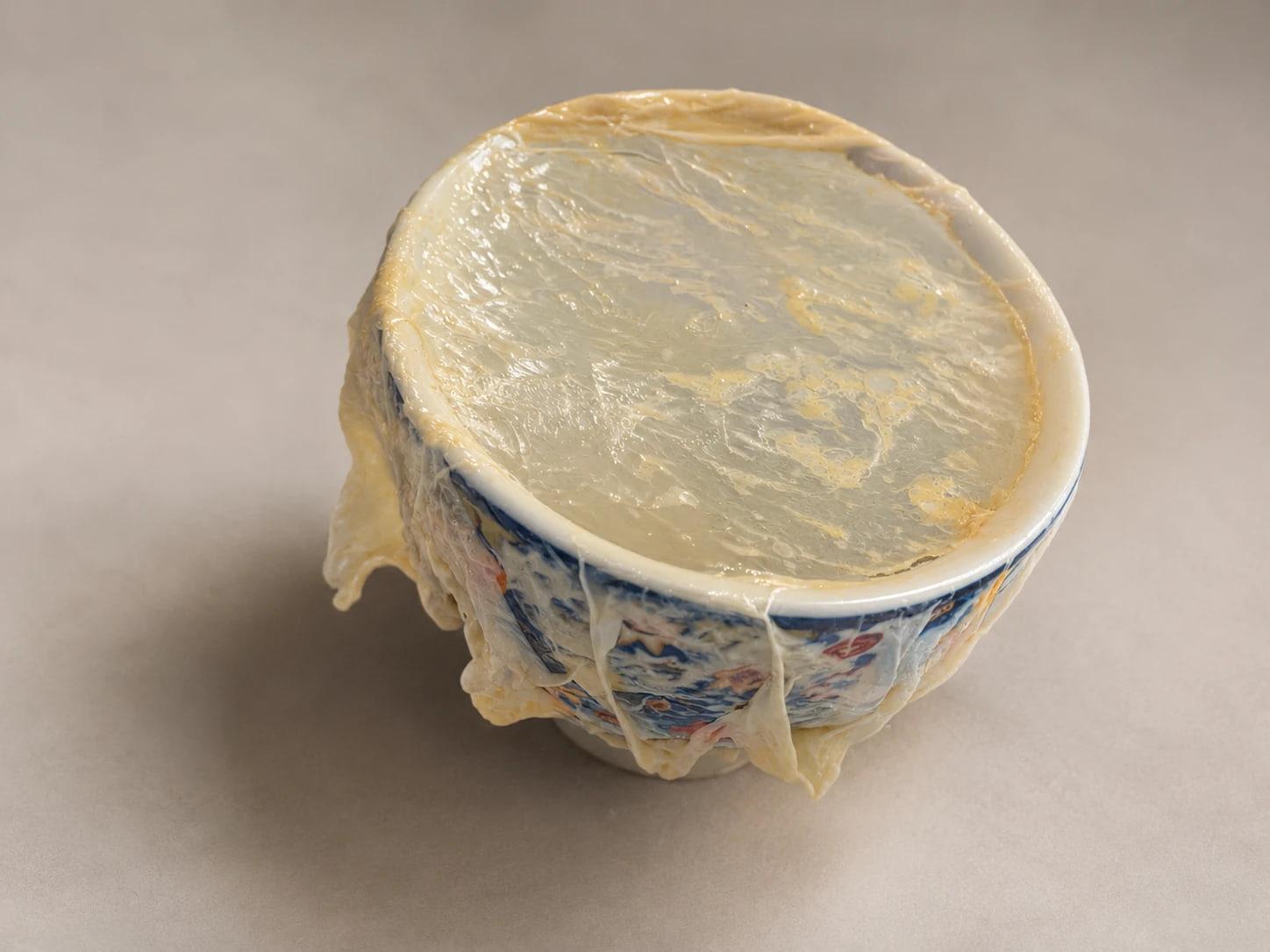
An upturned blue-and-white porcelain bowl covered in a glossy, yellowish milk skin that drapes over its sides.
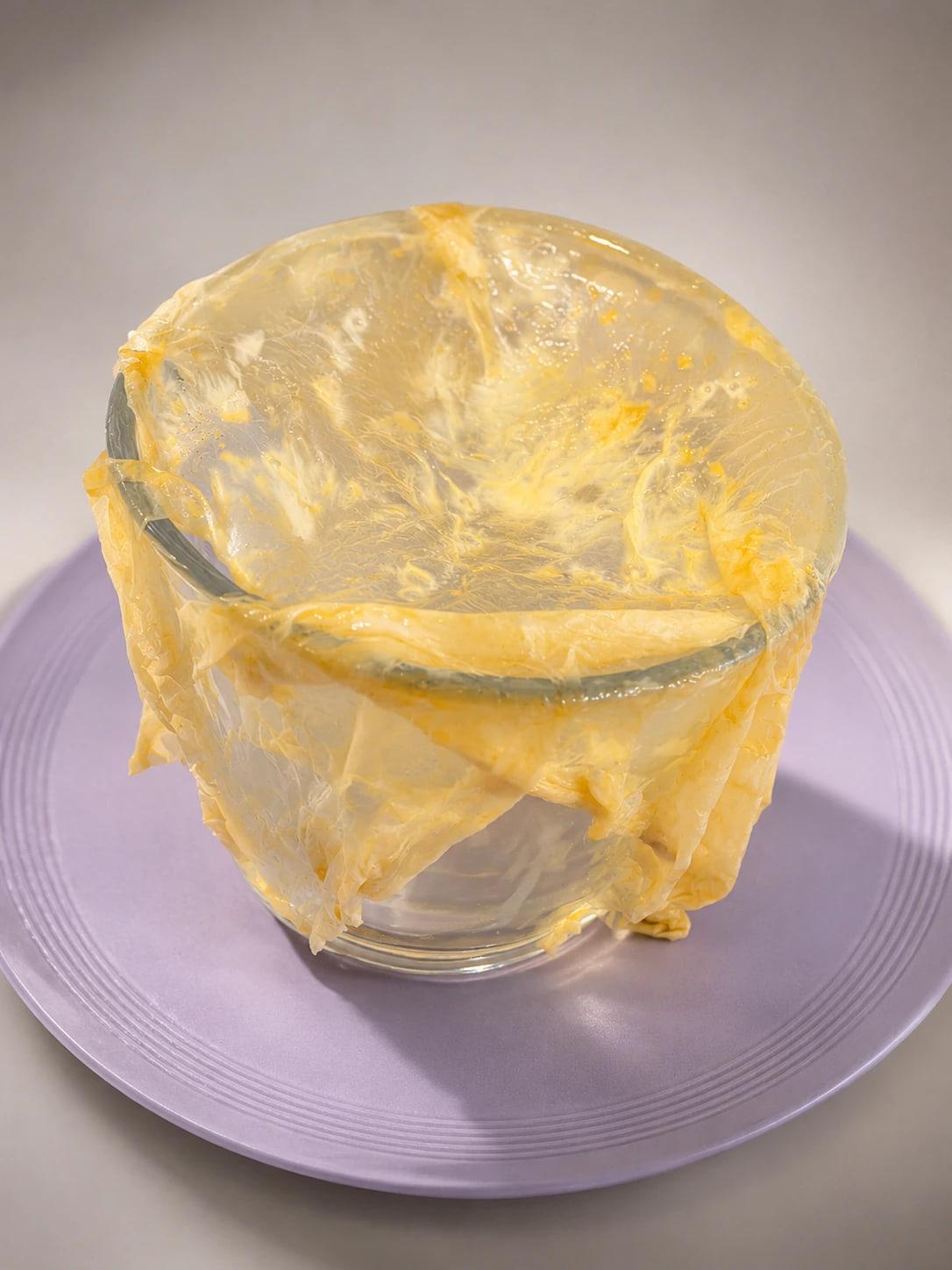
An upturned glass bowl on a lilac plate, wrapped in a thin, crumpled yellow milk skin.
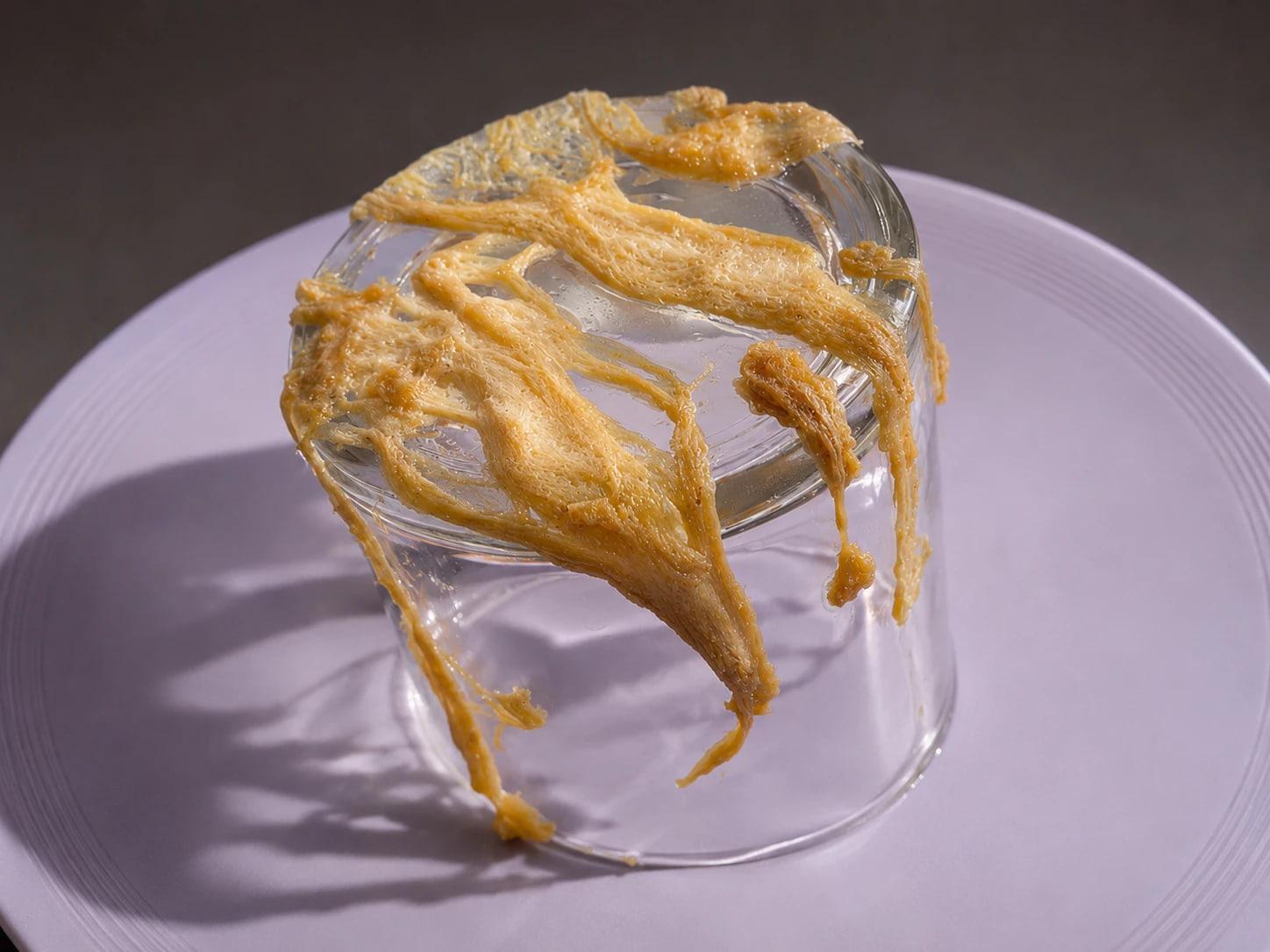
An upturned drinking glass on a lilac plate, strands of fibrous golden milk skin hanging down its sides.

I keep returning to a question:

How do we dare to stay next to something alive without turning it into our responsibility? How do we accept a presence that does not ask for care, when care itself becomes the language through which we control?
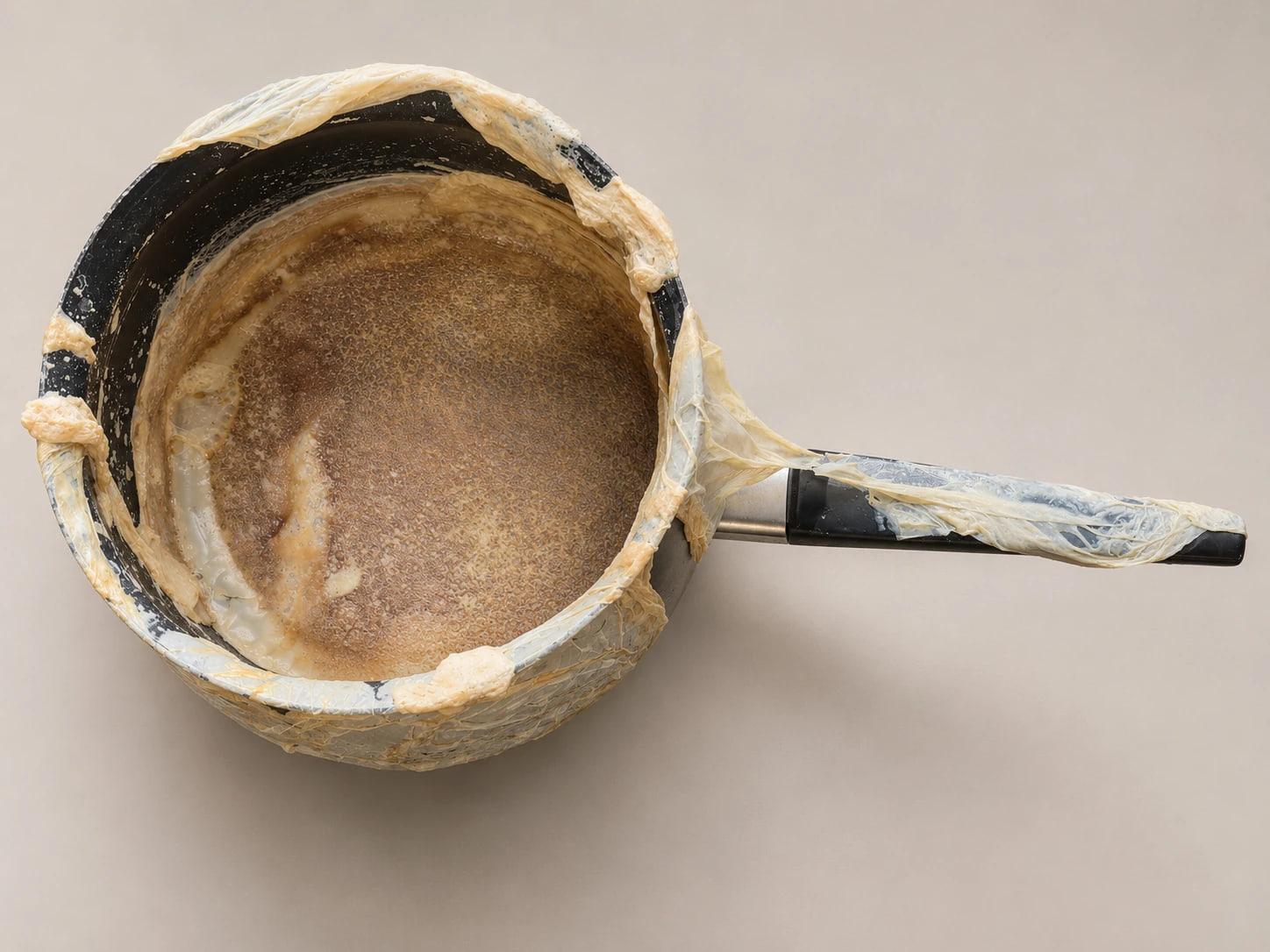
Top view of a black saucepan, a brown layer of dried milk across the bottom and pale skin clinging to the rim and handle.
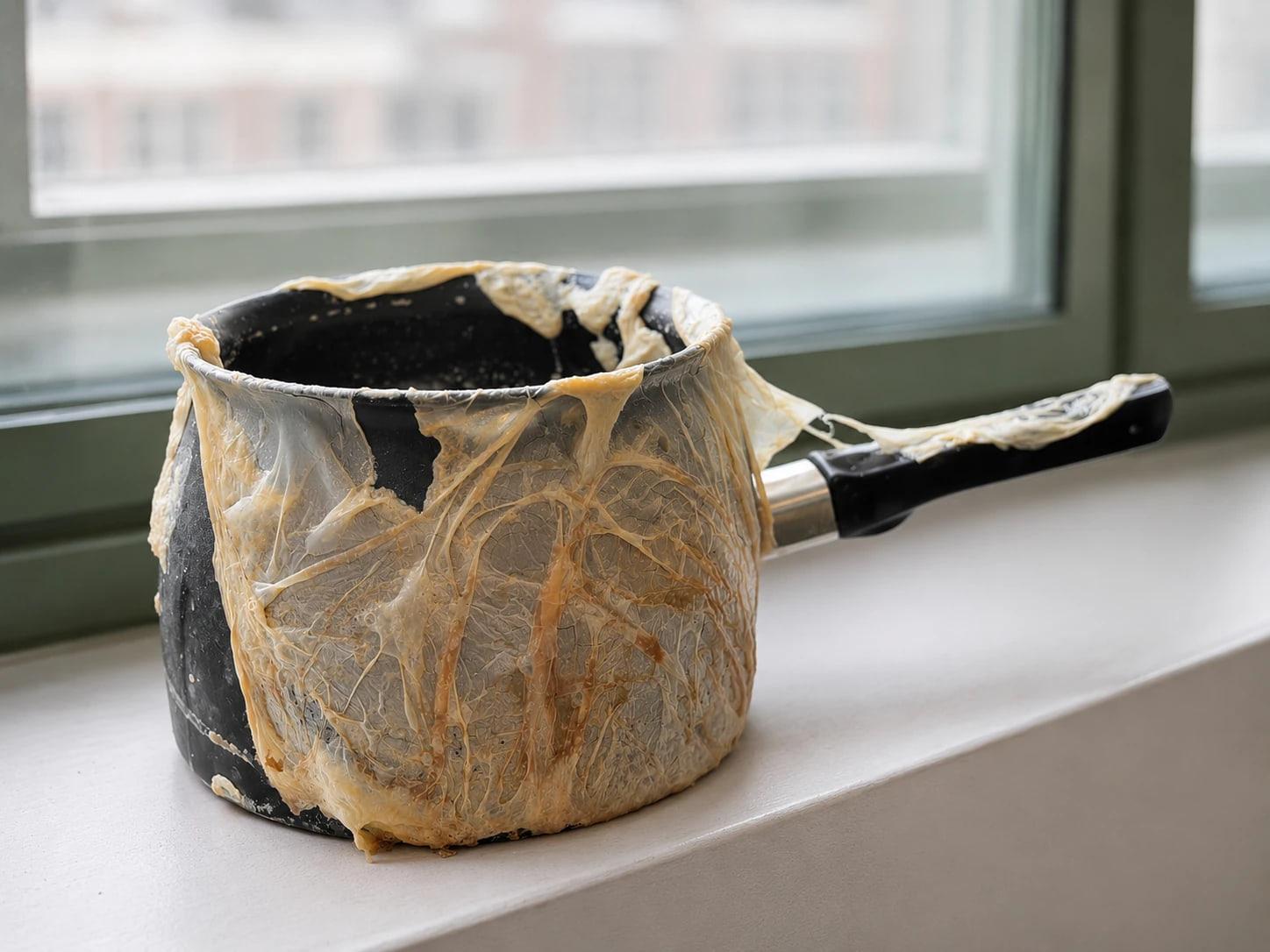
The same saucepan on a windowsill, its outside covered in a translucent milk skin veined with amber lines.
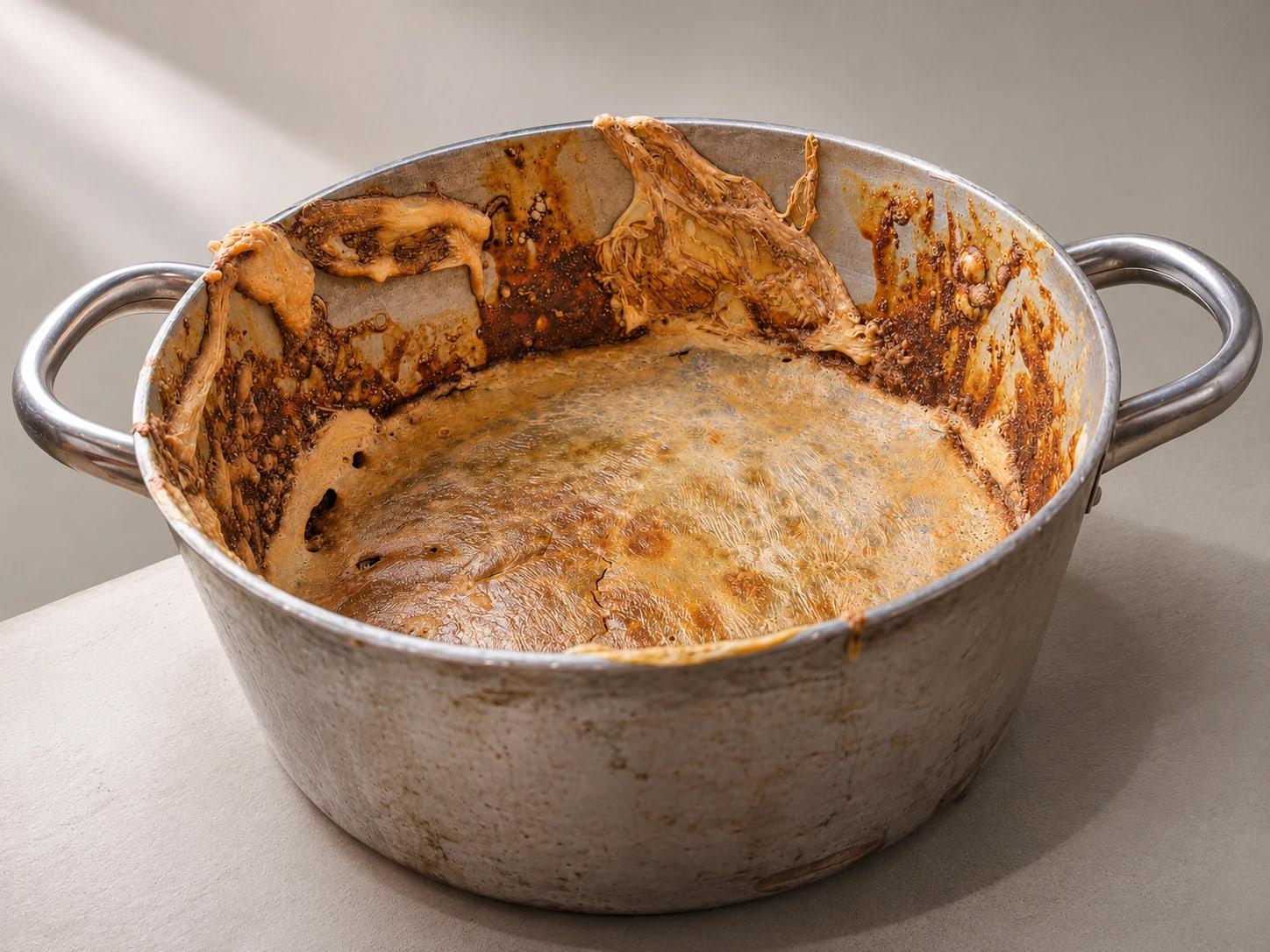
An old aluminium pot, its inside streaked with burnt milk and torn, caramel-coloured skin.
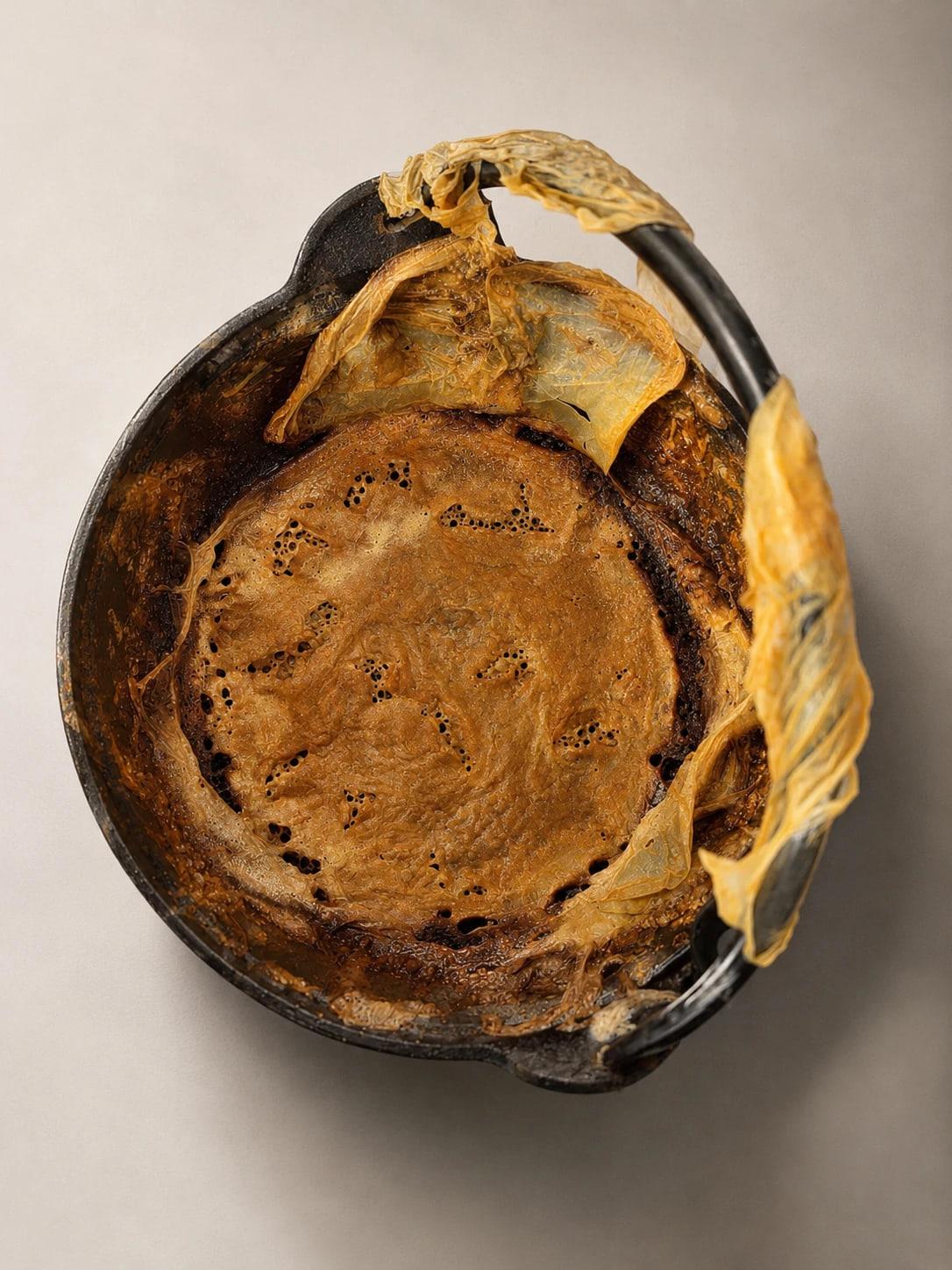
Top view of a black pan with a disc of burnt, porous milk skin, golden sheets of skin draped over its handles.
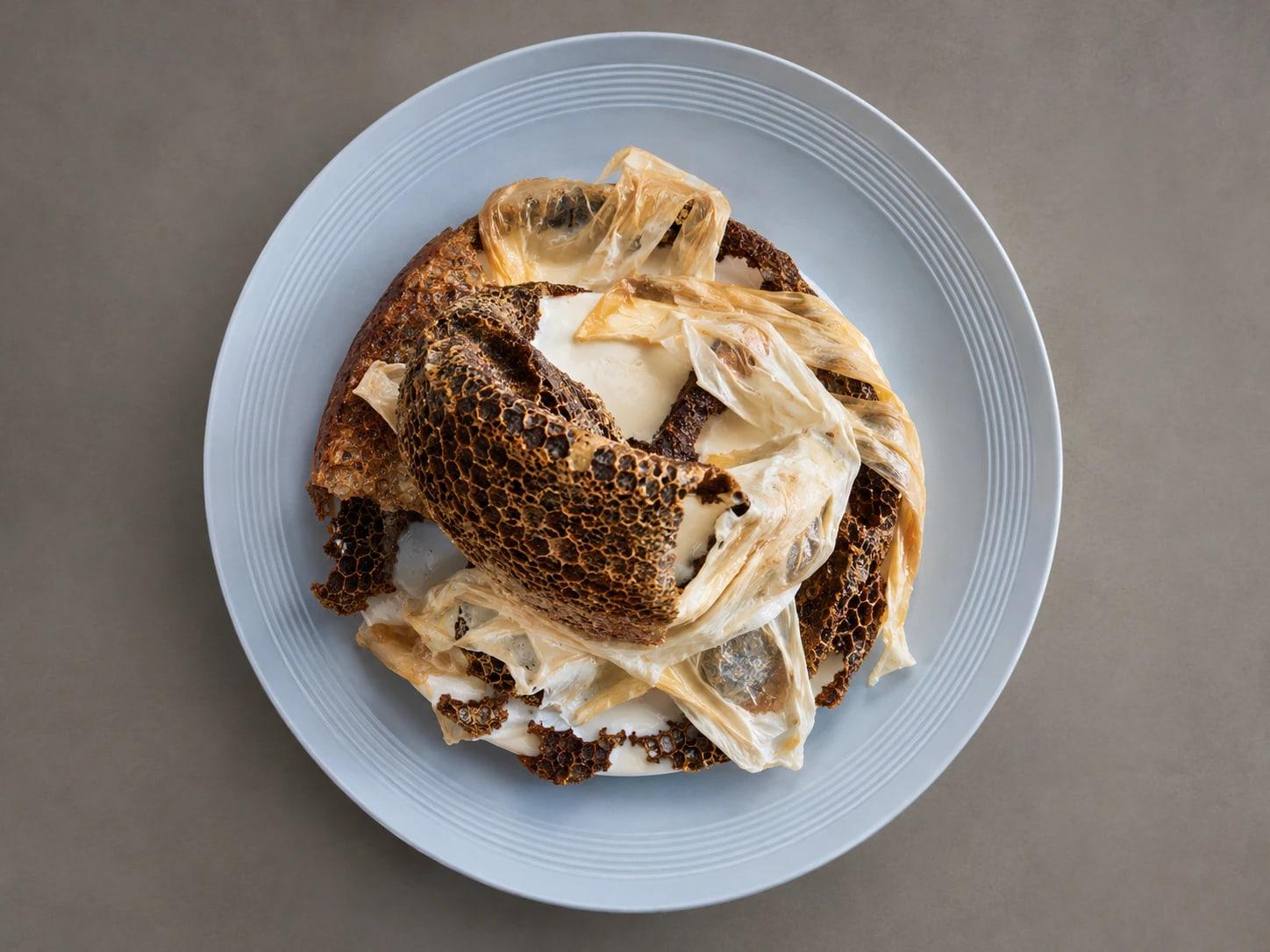
Top view of a pale blue plate heaped with brittle, honeycombed brown milk skin and translucent sheets.